
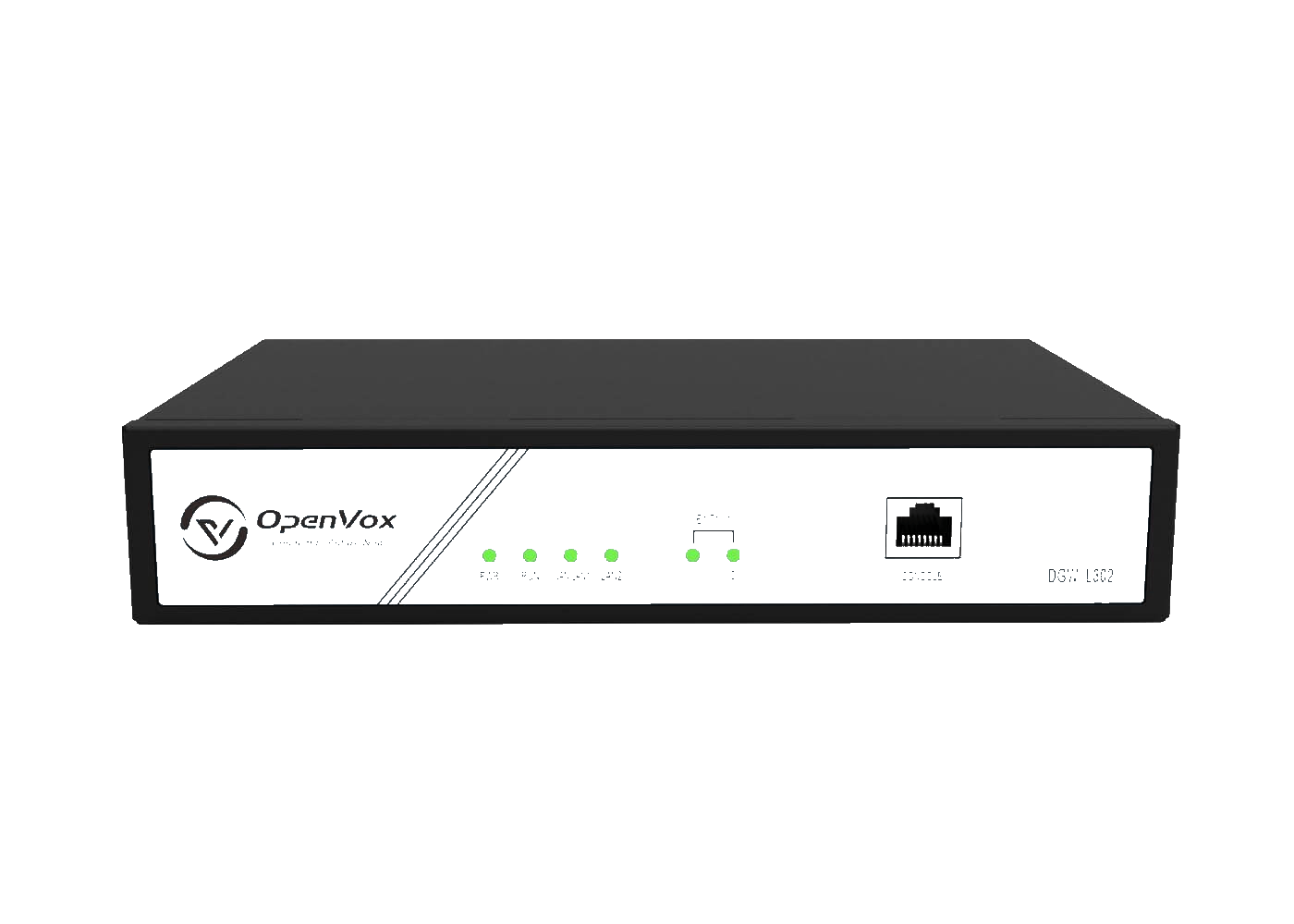
OpenVox E1/T1/PRI VoIP Gateways

OpenVox DGW E1/T1/PRI VoIP Gateway

Bridge traditional E1/T1/PRI trunks, legacy PBX systems, and PSTN services into SIP, IPPBX, softswitch, and IMS networks with 1, 2, and 4-span digital gateway options.

Move E1/T1/PRI trunks to SIP without replacing the telephony edge.

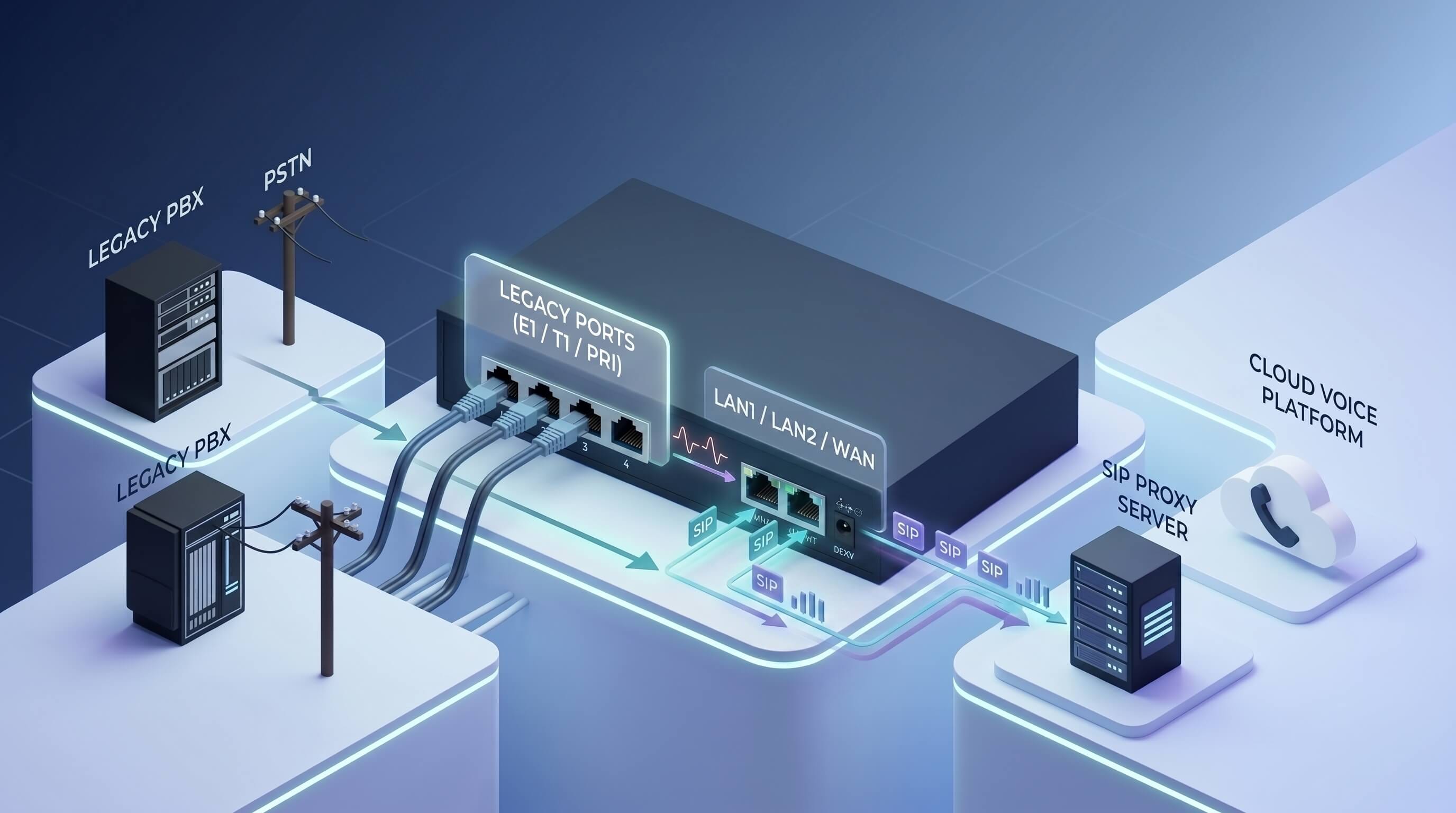
OpenVox digital gateways bridge traditional trunk access into IP voice networks, helping teams keep PBX/PSTN services online while moving to IPPBX, SIP server, softswitch, or IMS platforms.

  • Preserve carrier trunks and PBX/PSTN interconnection during staged migration.
  • Bridge PRI, R2, or SS7 trunk access into SIP, IPPBX, softswitch, or IMS platforms.
  • Use routing rules, trunk groups, live status, logs, SNMP, TR069, and API paths to simplify rollout and maintenance.
OpenVox E1 T1 PRI trunk gateway network deployment

Built for real E1/T1 migration scenarios.

Use OpenVox digital gateways where existing trunks, PBX equipment, or carrier interconnection must stay online while voice services move to IP.

1-4E1/T1 spans

PBX-to-IP migration

Connect legacy PBX systems to SIP, IPPBX, or softswitch platforms while keeping existing trunks in service.

  • Preserve useful digital trunks during staged migration.
  • Move call control upstream without replacing every telephony edge device at once.
Proof chips
  • DGW-L301 / L302 / L304
  • DGW-L20X 1/2/4-port line
PRISS7 / R2 support

Carrier and operator interconnection

Use PRI, R2, or SS7 signaling support for carrier-side and operator gateway projects.

  • Match gateway signaling with carrier-side requirements.
  • Plan point codes, link settings, and trunk behavior before commissioning.
Proof chips
  • PRI / SS7 / R2
  • E1 and T1 interface modes
512Routing rules

Call-center trunk expansion

Scale from 30 to 120 concurrent calls by selecting 1, 2, or 4-span models.

  • Increase digital trunk capacity while keeping the same trunk-to-SIP migration approach.
  • Use routing rules and trunk priority to control high-traffic call paths.
Proof chips
  • Asterisk, Elastix, 3CX, FreeSWITCH
  • VOS VoIP operating platform
TR069Remote management

Branch and remote voice access

Support enterprise branch interconnection and remote voice access without redesigning the whole voice edge.

  • Keep status, logs, SNMP, TR069, and web access available for distributed sites.
  • Use provisioning and management paths to simplify remote maintenance.
Proof chips
  • SNMP V1/V2c/V3
  • Auto Provision / logs

Signaling and IP interoperability for mixed voice networks.

Plan the E1/T1 side, IP voice side, and service handling together so legacy trunks can move into SIP networks with fewer rollout surprises.

PRI / R2 / SS7 signaling

  • Support common E1/T1 carrier and PBX signaling requirements across PRI, R2, and SS7 configuration paths.
  • Select 1, 2, or 4-span models by trunk capacity and signaling mode.
  • Validate timing, framing, coding, CRC4, and switch type before production rollout.

SIP and IAX2 integration

  • Connect the IP side to Asterisk, Issabel, Elastix, 3CX, FreeSWITCH, VOS, BroadSoft, SIP server, softswitch, or IMS platforms.
  • Use SIP or IAX2 endpoints to bridge TDM trunks into the IP voice core.
  • Use routing rules, trunk groups, and trunk priority to control traffic between TDM and IP destinations.

Voice, fax, and QoS handling

  • Use G.711A/U, G.729, G.722, GSM, and model-supported codec options for voice planning.
  • Support T.38 or pass-through fax for sites that still depend on fax services.
  • Plan SIP TLS/SRTP, ToS/DiffServe, and 802.1p/Q settings where security and QoS policies require them.

E1/T1 gateway model and capability matrix.

Compare trunk capacity, IP integration, voice handling, management, and hardware differences across OpenVox E1/T1 gateway models.

SpecificationDGW-L301DGW-L302DGW-L304DGW-L20X
Trunk Capacity
Digital trunk interfaces1 E1/T1/PRI2 E1/T1/PRI4 E1/T1/PRI1/2/4 E1/T1
Concurrent calls306012030/60/120
SignalingPRI / SS7 / R2
IP Integration
IP voice sideSIP / IAX2
Compatible platformsAsterisk, Issabel/Elastix, 3CX, FreeSWITCH, VOS, BroadSoft, SIP server, softswitch, and IMS platforms
Routing rules512 routing rules with flexible routing settings
Trunk managementPort groups, trunk groups, and trunk priority
Number handlingCaller and callee number manipulation
Voice And Service Handling
Voice codecsG.711A/U, G.729, G.722, GSM; L20X also lists G.723
Fax modesT.38 / pass-through fax
Echo cancellationSupported
Status visibilityInterface status, channel status, call status, SIP/IAX2 and routing status
Management And Diagnostics
Local administrationWeb GUI / HTTPS and SSH access
Remote managementAuto Provision, SNMP, TR069, and OpenVox Cloud Management
DiagnosticsInterface status, channel status, call status, logs, and network capture
Integration pathOpenAPI or AMI paths for custom operations integration
Physical
Network ports2 x 10/100 Mbps2 x 1000 MbpsWAN + LAN
Console / local accessRS232 (RJ45)Web GUI / SSH
Chassis size232 x 152 x 45 mmVaries by L20X variant
Weight1.2 kg1.3 kg1.4 kgVaries by L20X variant
Max power12 WVaries by L20X variant
Power supply12 V / 1 AVaries by L20X variant
Operating temperature0°C ~ 50°C
Storage temperature-20°C ~ 70°C
Humidity range10% ~ 90% non-condensing

Need help sizing an E1/T1/PRI gateway?

Tell OpenVox your trunk count, signaling mode, PBX or SIP platform, concurrent-call target, site plan, and quantity. We will help confirm the right DGW model for your deployment.