Wireless VoIP Gateways for Cellular Voice and SMS

OpenVox wireless gateways connect GSM, WCDMA, LTE, and SMS services with SIP-based communications, giving service providers, enterprises, and managed communication platforms a practical cellular access layer for voice and messaging.

OpenVox SWG and GWP wireless VoIP gateway product family

4 main hardware factors that shape the right gateway choice.

SWG and GWP share the same gateway system, feature set, and API capability. The selection comes down to hardware architecture, rack density, expansion requirements, and SIM card management.

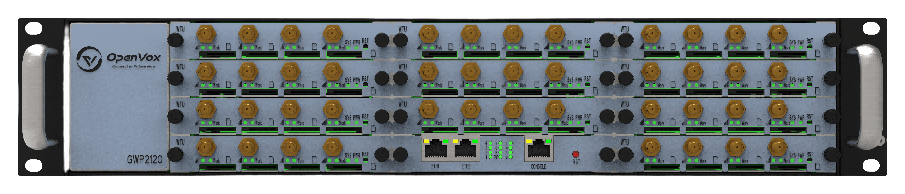
GWPModular chassis

Modular Design

GWP uses a modular chassis architecture for projects that need serviceable hardware modules and a more flexible expansion path.

  • Suitable for deployments that expect hardware changes over time
  • Prioritizes expansion flexibility over the most compact appliance footprint
Proof chips
  • Plug-in module planning
  • Flexible expansion
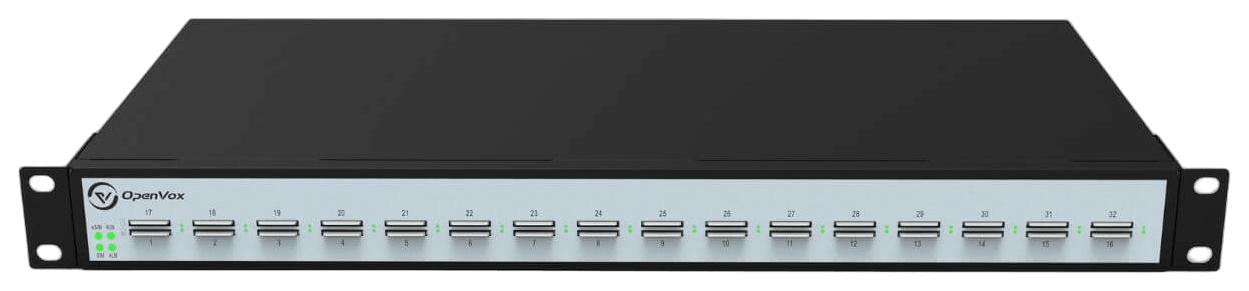
SWGIntegrated appliance

Integrated Design

SWG uses an integrated appliance structure for deployments that want simpler hardware, fixed capacity, and a compact rack installation.

  • Compact design provides higher port density
  • Simpler hardware structure delivers better cost efficiency
Proof chips
  • Fixed appliance capacity
  • Compact hardware design
32Ports in 1U SWG

Capacity and Density

SWG provides higher rack density for projects that need more wireless ports in limited rack space, while GWP prioritizes modular capacity planning.

  • SWG supports up to 32 ports in a 1U appliance
  • GWP supports up to 20 ports in a 1U modular chassis
Proof chips
  • SWG: up to 32 ports
  • GWP: up to 20 ports
128SIM cards on 32-port SWG

Multi-SIM Switching

SWG supports one wireless port mapping to four SIM cards, enabling larger SIM pools for carrier selection, SIM rotation, and traffic policy needs.

  • One SWG wireless port can correspond to four SIM cards
  • This 1-to-4 SIM switching model is not available on GWP
Proof chips
  • 1 port to 4 SIM cards
  • Up to 128 SIM cards

The same software capability set
across SWG and GWP.

SWG and GWP are two hardware paths within the OpenVox wireless gateway portfolio. They share the gateway system, core calling and messaging functions, routing and management workflows, and API capability set.

01

Same wireless gateway system for calling, messaging, routing, and device management

02

Aligned SMS, USSD, routing, remote management, and API workflows across both series

03

Series selection is driven by hardware architecture, density, SIM strategy, and expansion model

Connect cellular voice and SMS
to SIP communications.

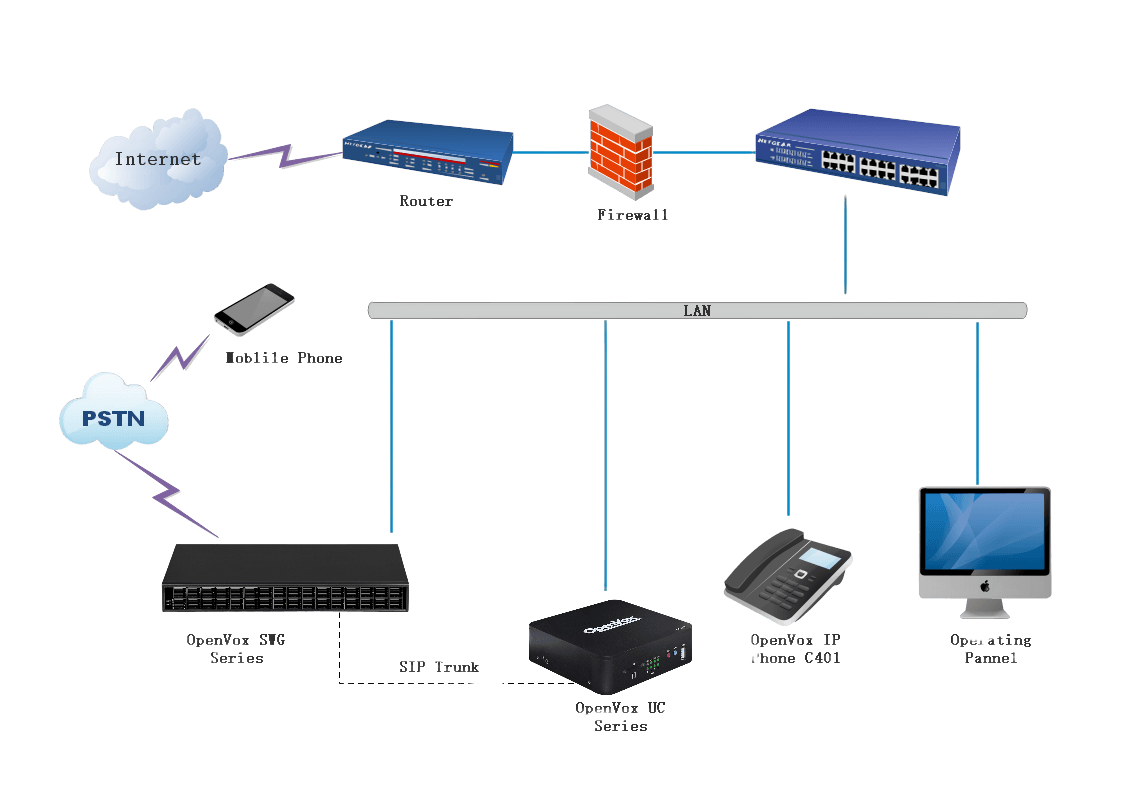
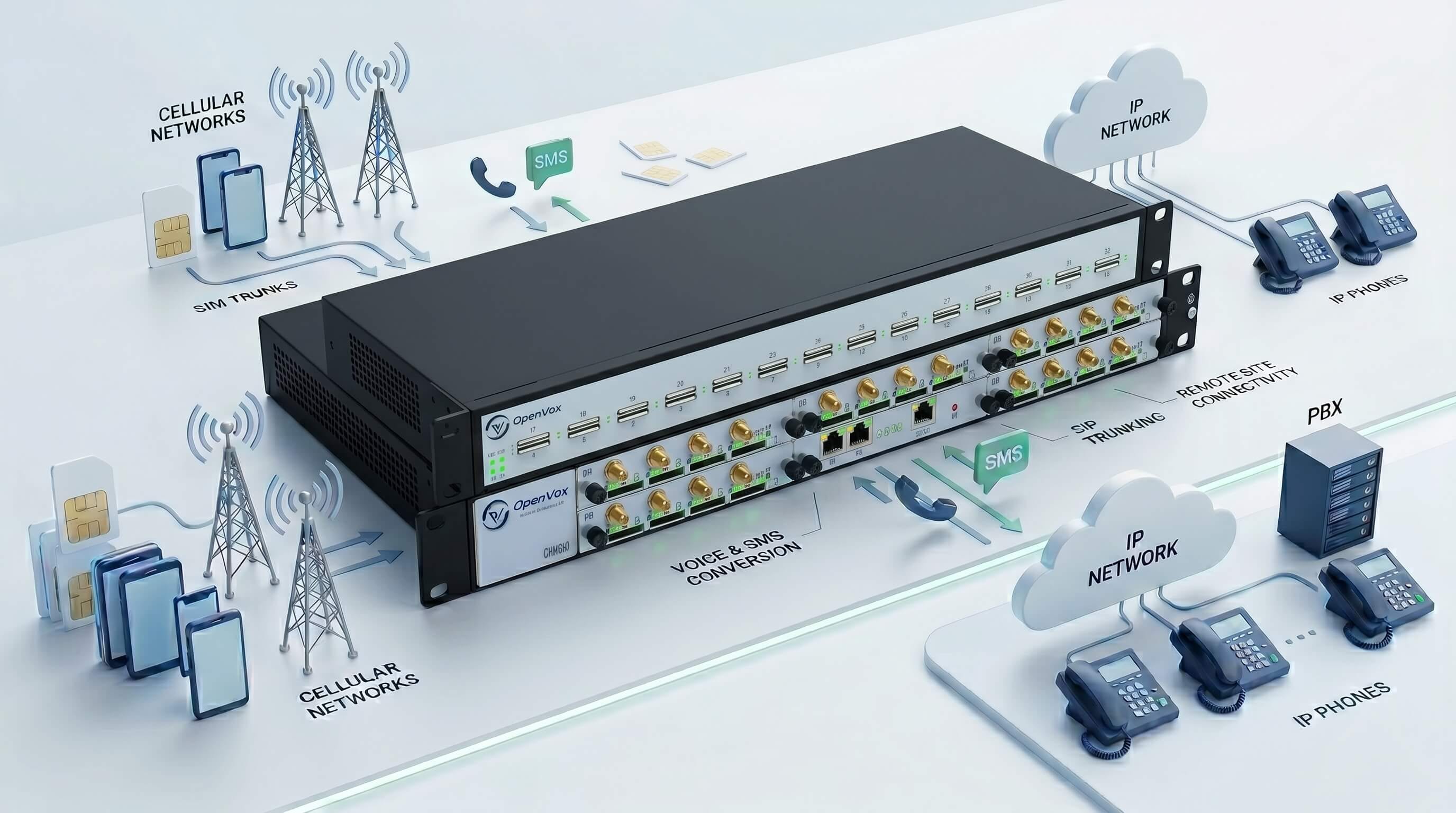
Wireless VoIP gateways sit between mobile networks and IP communications infrastructure. They convert wireless channels into SIP-accessible resources, so teams can route mobile voice traffic, operate SMS workflows, and manage cellular connectivity through gateway software.

  • Connect GSM, WCDMA, and LTE channels to PBX, call center, carrier routing, and service platform environments.
  • Support SMS sending, receiving, group sending, SMS-to-email, HTTP SMS APIs, USSD, and remote gateway control workflows.
  • Manage wireless ports, SIP endpoints, routing rules, call limits, SMS limits, and network settings from the gateway system.
Wireless gateway topology connecting mobile networks with SIP communications

SWG vs GWP Series Comparison

The table below summarizes shared software capabilities and the hardware differences that should drive series selection.

SpecificationSWG SeriesGWP Series
Shared Software Platform
Software platformUnified wireless gateway software platform
Feature listVoice, SMS, USSD, routing, management, and monitoring
APIHTTP SMS API and management API workflows
Web UIWeb-based gateway management interface
Hardware Architecture
Hardware designIntegrated appliance with simpler, more compact hardwareModular chassis with more flexible expansion planning
Expansion modelFixed integrated structure; users do not expand it themselvesPlug-in modular structure for more flexible hardware growth
Hardware complexitySimpler hardware structure with better cost efficiencyMore complex modular structure for flexible expansion
1U port densityUp to 32 ports in 1UUp to 20 ports in 1U
Maximum capacityUp to 32 ports and 128 SIM cards in 1UUp to 20 ports and 20 SIM cards in 1U
SIM card switchingSupports 1 port to 4 SIM cards; 32 ports can map to up to 128 SIM cardsStandard modular SIM layout; no 1-port-to-4-SIM switching model
Typical selection reasonCompact deployment, higher rack density, fixed capacity, and multi-SIM switchingModular expansion, serviceable hardware planning, and flexible growth

Select the wireless gateway architecture for your deployment.

Start with SWG when the project needs compact integrated density and multi-SIM switching. Start with GWP when modular hardware expansion and long-term hardware flexibility are the priorities.