
Three chassis positions
X1911, X1960, and X1981 form a clear entry, midrange, and high-density UScale selection path.
A modular unified gateway platform family for enterprise voice access, carrier interconnection, and mixed IP, analog, and digital telephony rollout.

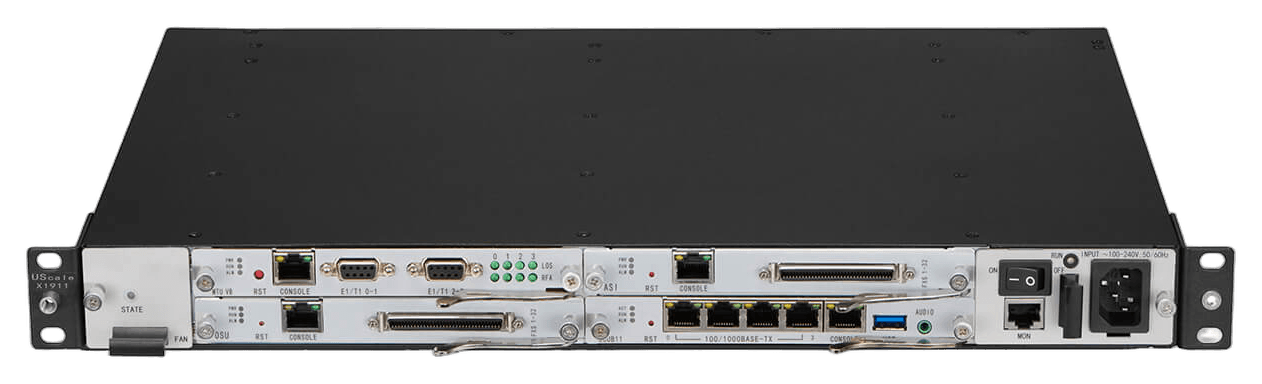
Entry-level UScale X1900 unified gateway for projects that need modular voice access in a compact chassis footprint.
Use the three-card layer as a quick selection guide before opening the detailed comparison matrix.
UScale X1911
Use X1911 when the rollout needs UScale architecture in the smallest X1900 positioning tier.
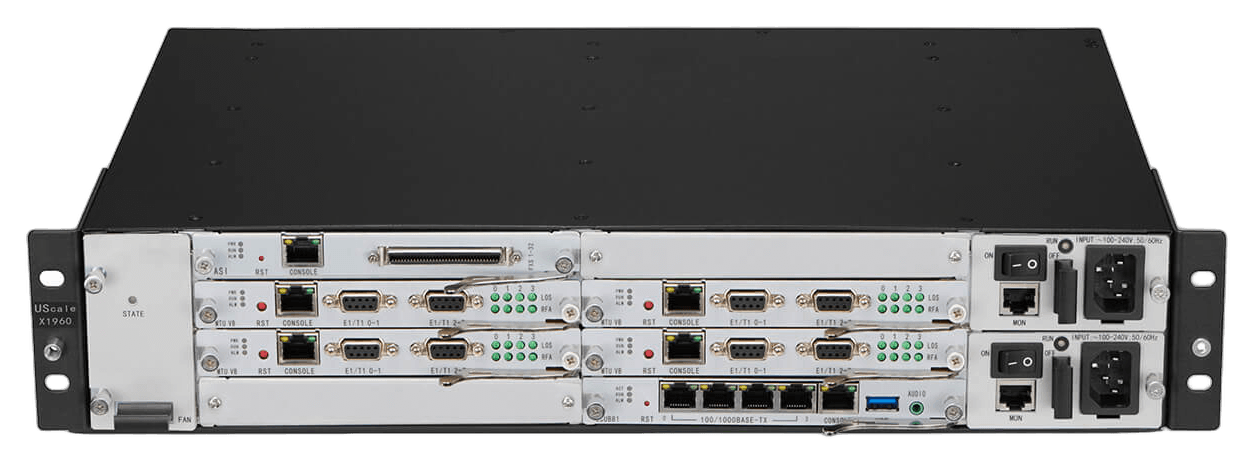
UScale X1960
Use X1960 when the site needs more room for mixed boards and access growth.
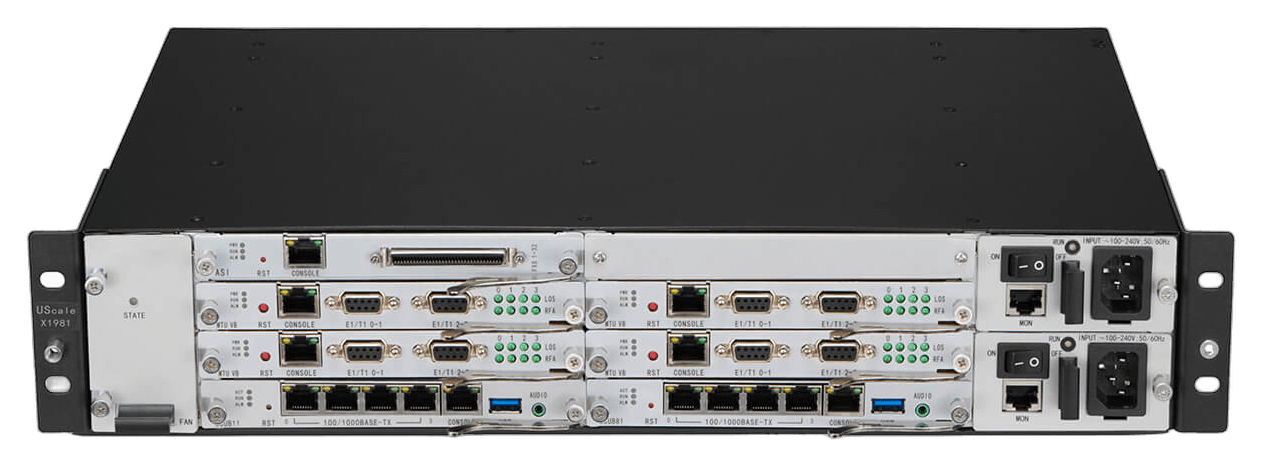
UScale X1981
Use X1981 when the project is driven by larger access aggregation and chassis capacity.
Keep the UScale story focused on modular gateway architecture, access-board planning, and maintainable chassis growth.
Plan IP, analog, and digital voice access on one modular gateway family instead of separating every access type into isolated appliances.
Select the board mix around project access needs, then scale across X1911, X1960, and X1981 as chassis requirements grow.
Use hot-swappable board positioning to keep maintenance and expansion aligned with carrier and enterprise access workflows.
Keep routing, access planning, and deployment operations focused on a unified gateway layer for large voice environments.
X1911, X1960, and X1981 form a clear entry, midrange, and high-density UScale selection path.
The model conversation starts with access boards, slot planning, and final interface requirements.
The aggregate page helps buyers compare the family before opening the model detail pages.
Position UScale as a scalable unified gateway platform rather than a small-office IPPBX appliance.
UScale selection should connect the chassis tier, module plan, access role, and maintenance model before the project moves into quotation.
Start with X1911, X1960, or X1981 according to the site footprint, density target, and expansion expectation.
Map analog, digital, and IP access requirements into the required module selection before finalizing the gateway model.
Use the platform as a gateway layer between trunks, enterprise voice systems, and legacy endpoint access.
Keep hot-swappable module planning, maintenance windows, and future expansion in the same architecture decision.
Source-backed capacity, interface, trunk, conference, voicemail, and physical parameters from the UScale X Series whitepaper and original model pages.
| Specification | UScale X1911 | UScale X1960 | UScale X1981 |
|---|---|---|---|
| Capacity | |||
| Maximum Users | 300 | 1,000 | 20,000 |
| Maximum SIP Users | 300 | 1,000 | 20,000 |
| Maximum Local Analog Users | 96 | 224 | 192 |
| Maximum Concurrent Calls | 100 | 420 | 2,000 |
| Interfaces | |||
| Maximum FXO Interfaces | 36 | 84 | 72 |
| Maximum PXS Interfaces | 36 | 84 | 72 |
| Maximum E1/T1 Interfaces | 12 / 12 | 28 / 28 | 24 / 24 |
| GE Interfaces | 4 | 4 | 4 |
| Trunks And UC Services | |||
| SIP Trunk Groups | 255 | 255 | 1,024 |
| Maximum SIP Trunk Group Channels | 100 | 1,000 | 20,000 |
| Maximum Conference Users | 60 | 360 | 2,000 |
| Voicemail Concurrent Channels | 12 | 30 | 30 |
| Physical And Power | |||
| Rack Height | 1U | 2U | 2U |
| Dimensions | 440 x 316.6 x 44 mm | 440 x 316.6 x 86 mm | 440 x 316.6 x 86 mm |
| Weight | 6 kg fully equipped | 10 kg fully equipped | 10 kg fully equipped |
| Power | 100-240V AC | 100-240V AC, 1+1 backup | 100-240V AC, 1+1 backup |
Move from family selection into product detail pages, datasheets, firmware, and support paths for final engineering review.
Resources
Collect manuals, deployment references, and supporting documents for UScale gateway planning.
Products
Review X1911, X1960, and X1981 detail pages when the chassis tier and board mix need final confirmation.
Resources
Use firmware resources for maintenance planning and version alignment after deployment.
Support
Submit project and interoperability cases when deployment scope needs technical follow-up.