
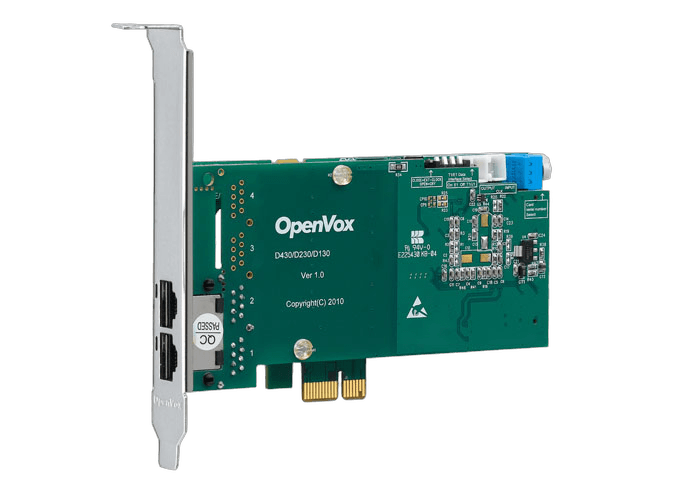
 T1 / E1 / J1 spansIntegrated carrier trunk access
Use D-series cards when T1, E1, or J1 carrier trunks should terminate directly inside the PBX server.
OpenVox Digital Cards give a standard PCIe server direct E1, T1, and J1 trunk access for Asterisk-based PBX deployments. By bringing carrier PRI, SS7, R2, or legacy PBX trunks inside the chassis, the server gains high-capacity voice interconnect, centralized call control, and a cleaner integrated architecture without an external digital gateway.
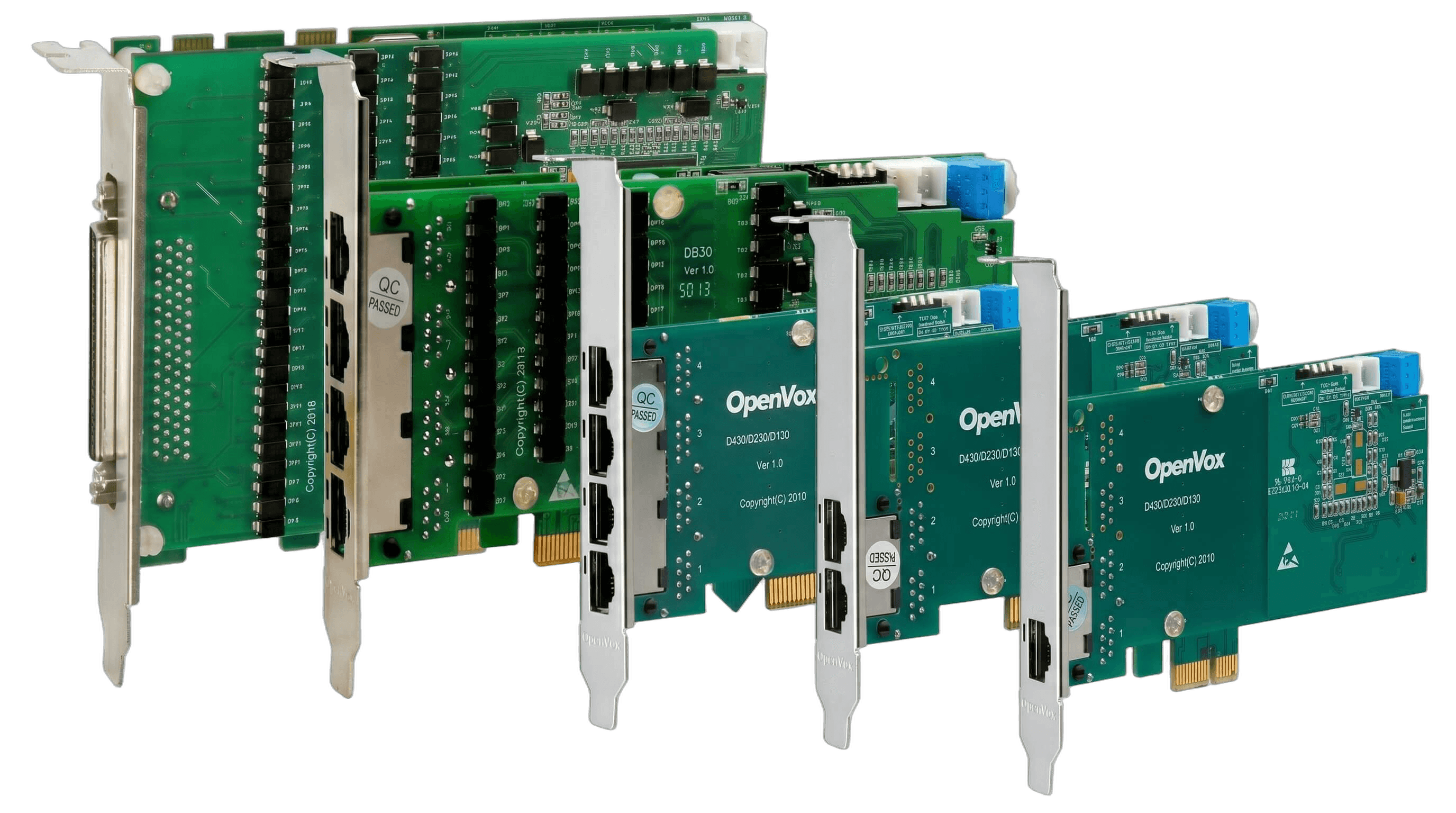
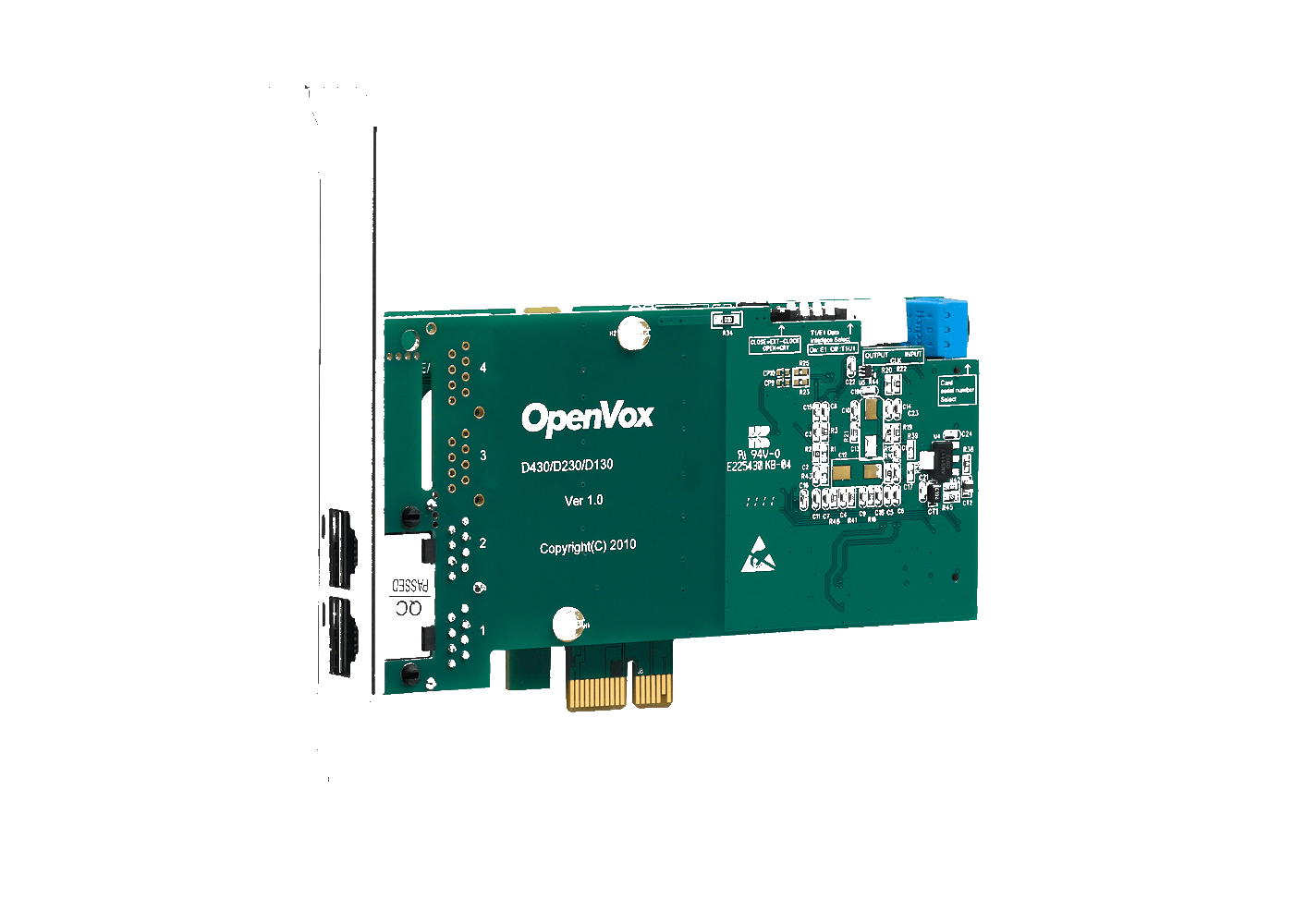
Specify the delivered trunk type, signaling mode, required span count, and expected concurrent calls before selecting a D-series card. This gives the PBX server the right trunk capacity without adding an external gateway layer.
Confirm the selected span density, host slot, operating system, DAHDI support, power availability, and optional hardware echo cancellation before finalizing the PBX server configuration.
T1 / E1 / J1 spansIntegrated carrier trunk accessUse D-series cards when T1, E1, or J1 carrier trunks should terminate directly inside the PBX server.
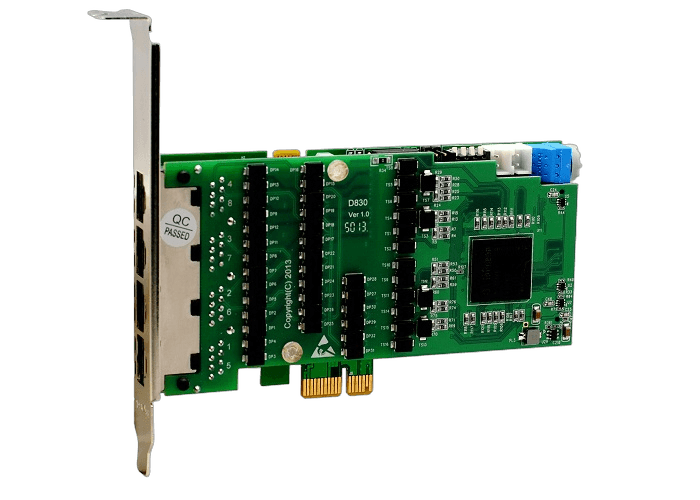 D130 to D1630E density1 to 16 spans
Select the model by span count, then confirm channel capacity, framing, and signaling with the carrier or upstream PBX.
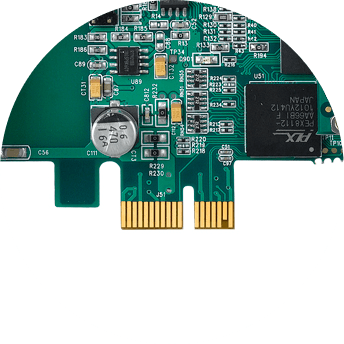 PCIe host interfaceModern motherboard default
Use PCIe for current server boards; choose PCI only for older PCI-only platforms.
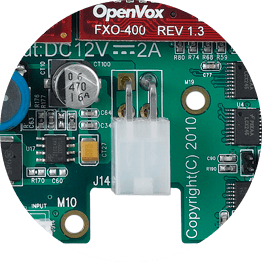 Card power connectorPower input confirmation
Check card power input and available server leads before finalizing the configuration.
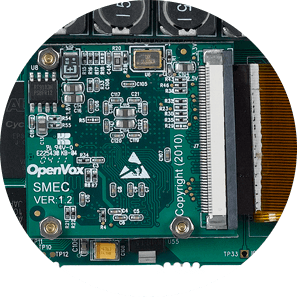 HWEC hardware echo cancellationHardware DSP echo processing
Add HWEC when the deployment needs dedicated echo handling on the card.
Choose D130, D230, D430, D830, or D1630E according to the number of T1, E1, or J1 spans the server must terminate. Lower-density models suit compact PRI access, while D830 and D1630E support larger multi-span trunk consolidation.
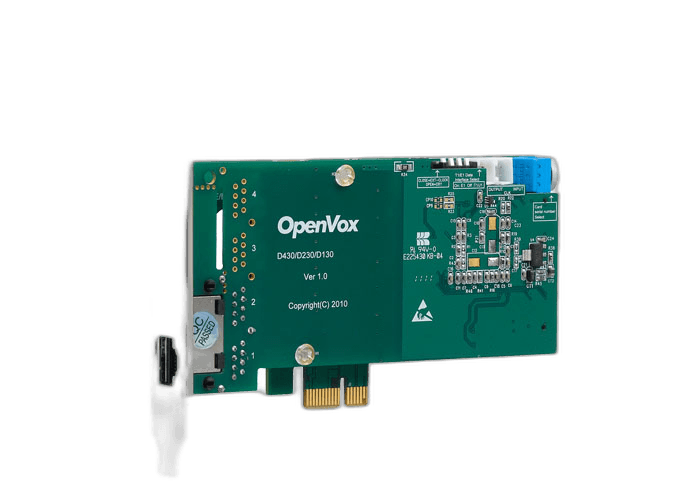
Digital card model
Single-span D-series card for compact PRI or legacy trunk access inside a PBX server.
Digital card model
Two-span D-series card for PBX servers that need more capacity than a single carrier span.
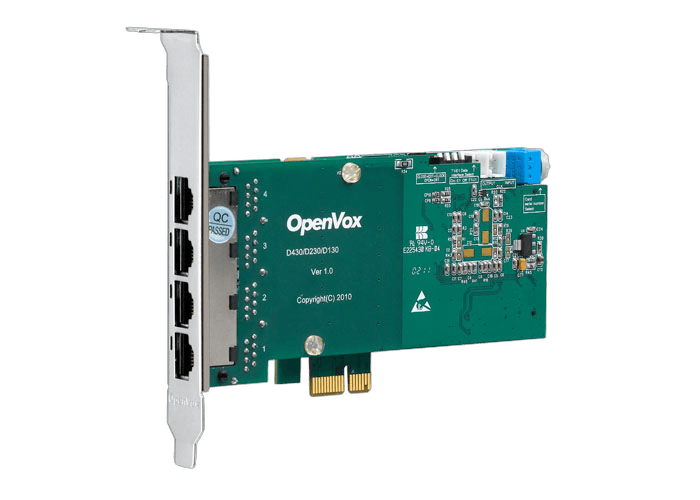
Digital card model
Four-span D-series card for consolidating multiple digital trunks in one PBX server.
Digital card model
Eight-span D-series card for high-channel carrier interconnect and larger PBX systems.
Digital card model
Sixteen-span D-series card for large digital trunk consolidation inside a single PBX server.
Compare the trunk role, signaling requirement, span capacity, and server fit to select the D-series card that matches the PBX deployment.
| Specification | D130 | D230 | D430 | D830 | D1630E |
|---|---|---|---|---|---|
| Digital trunk basics | |||||
| Use case | Use Digital Cards when T1, E1, or J1 trunks should terminate directly inside the PBX server instead of an external gateway. | ||||
| Trunk protocol | Confirm whether the carrier or upstream PBX delivers T1, E1, or J1 service before choosing the model. | ||||
| Signaling mode | Confirm PRI, SS7, R2, or other required line signaling with the carrier or upstream PBX. | ||||
| Model-by-model selection | |||||
| Span capacity | 1 span | 2 spans | 4 spans | 8 spans | 16 spans |
| Interface | T1 / E1 / J1 | T1 / E1 / J1 | T1 / E1 / J1 | T1 / E1 / J1 | T1 / E1 / J1 |
| Best fit | Compact PRI deployment | Small carrier interconnect | Multi-span trunk consolidation | High-channel PBX server | Large multi-span deployment |
| Capacity planning | Match single-span service | Support two-span service | Consolidate four spans | Scale to eight spans | Use for the highest listed density |
| Configuration confirmation | |||||
| Server platform | Confirm the host slot, card revision, operating system, DAHDI support, and available power for the target PBX server. | ||||
| Quotation details | Share the trunk type, signaling mode, span count, channel target, server details, and preferred D-series model for quotation confirmation. | ||||
Digital Cards are designed for PBX servers that terminate T1, E1, or J1 trunks inside the chassis. If the site needs analog endpoints, S/T BRI access, mixed interface modules, or standalone gateway operation, choose the matching OpenVox product family.
Send the T1/E1/J1 trunk type, signaling mode, span count, channel target, server slot, operating system, Asterisk version, and DAHDI version. OpenVox can confirm the suitable D-series model and prepare a quotation for the PBX build.