
Unified access and call control
Host the selected service modules, SIP control and approved application roles on the central platform.
Bring carrier access, call control and selected voice applications into one governed SIP environment. Add each access type according to interface, capacity and operational ownership requirements.
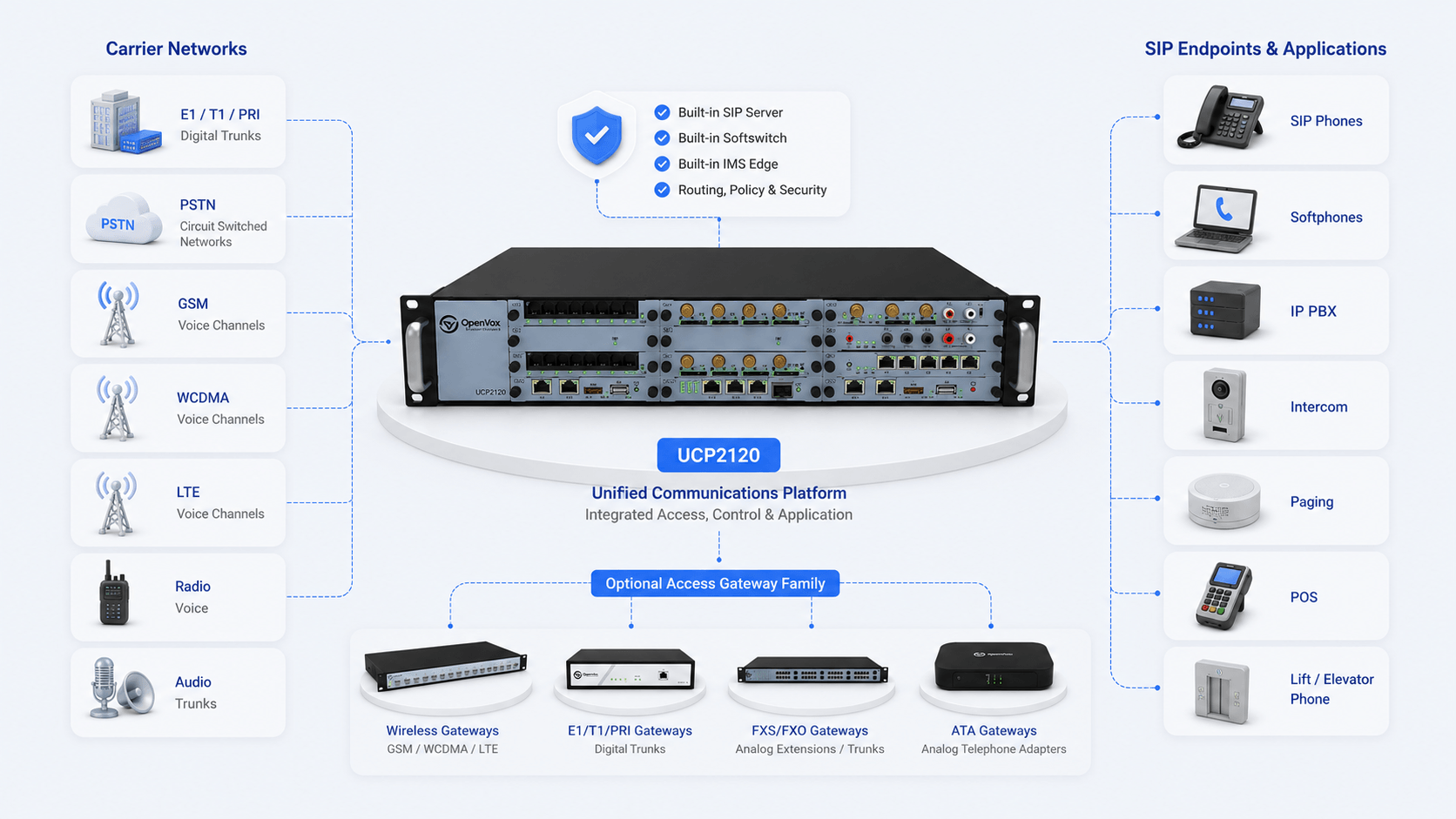
Carrier access requirements
Carrier environments may combine E1/T1/PRI, PSTN, cellular, radio or audio trunks with SIP phones, software clients, paging and other endpoints.
UCP2120 provides the central modular platform. External gateways extend a specific access type only when capacity, placement or operational ownership sits outside the chassis.
Host the selected service modules, SIP control and approved application roles on the central platform.
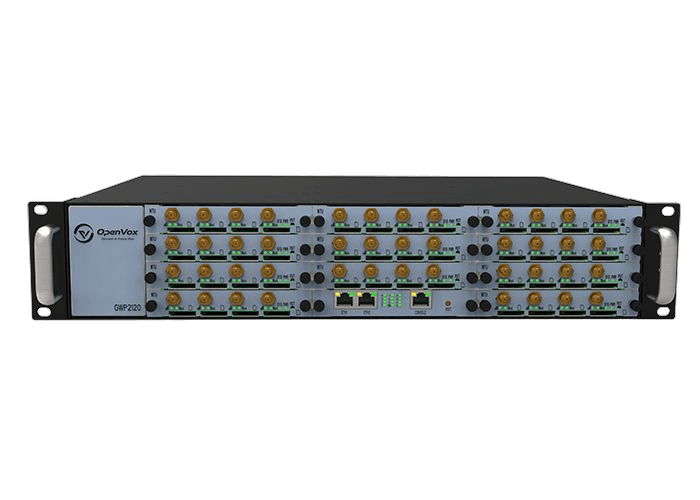
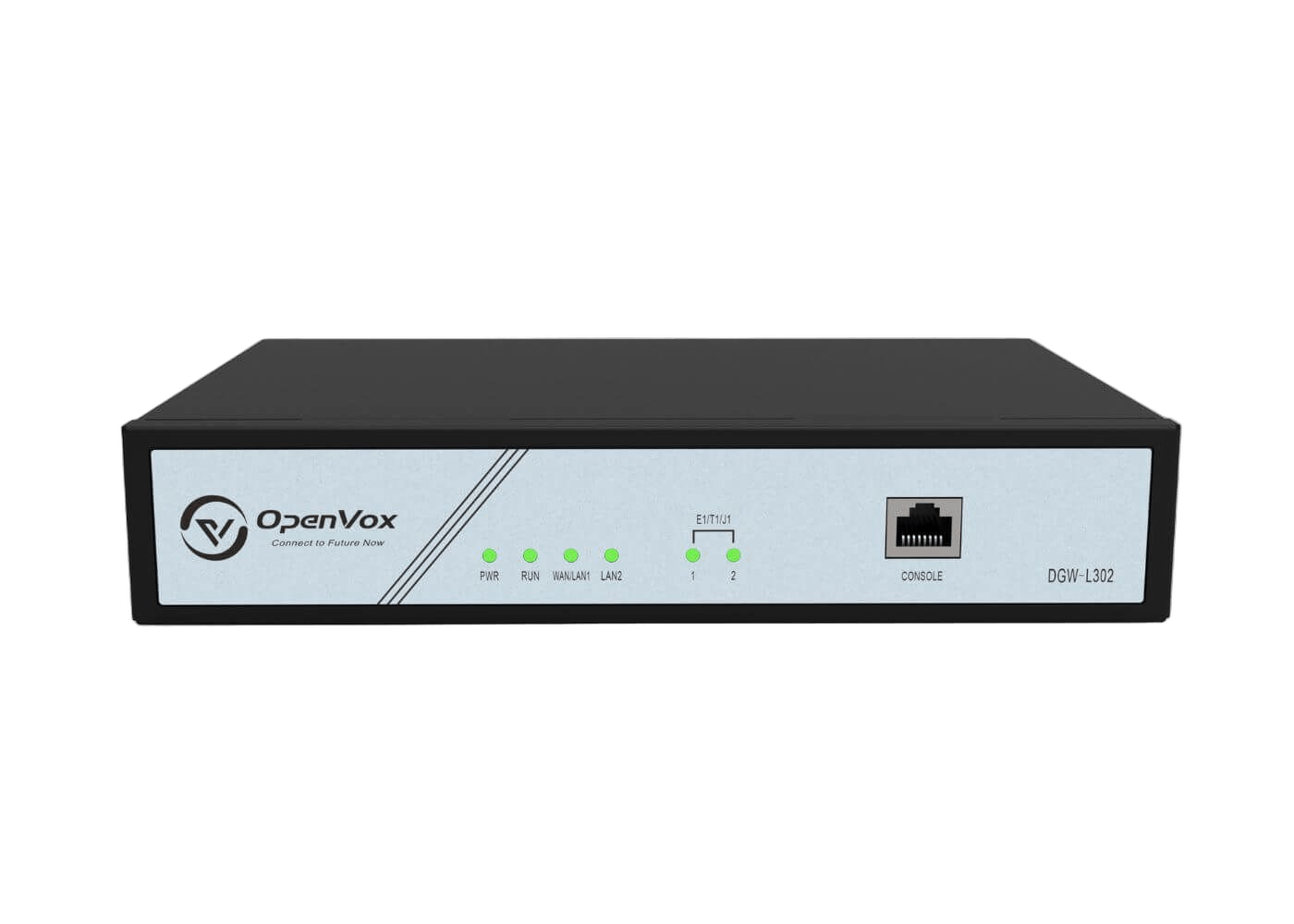
Use GWP or DGW only where cellular or E1/T1 access terminates outside UCP2120.
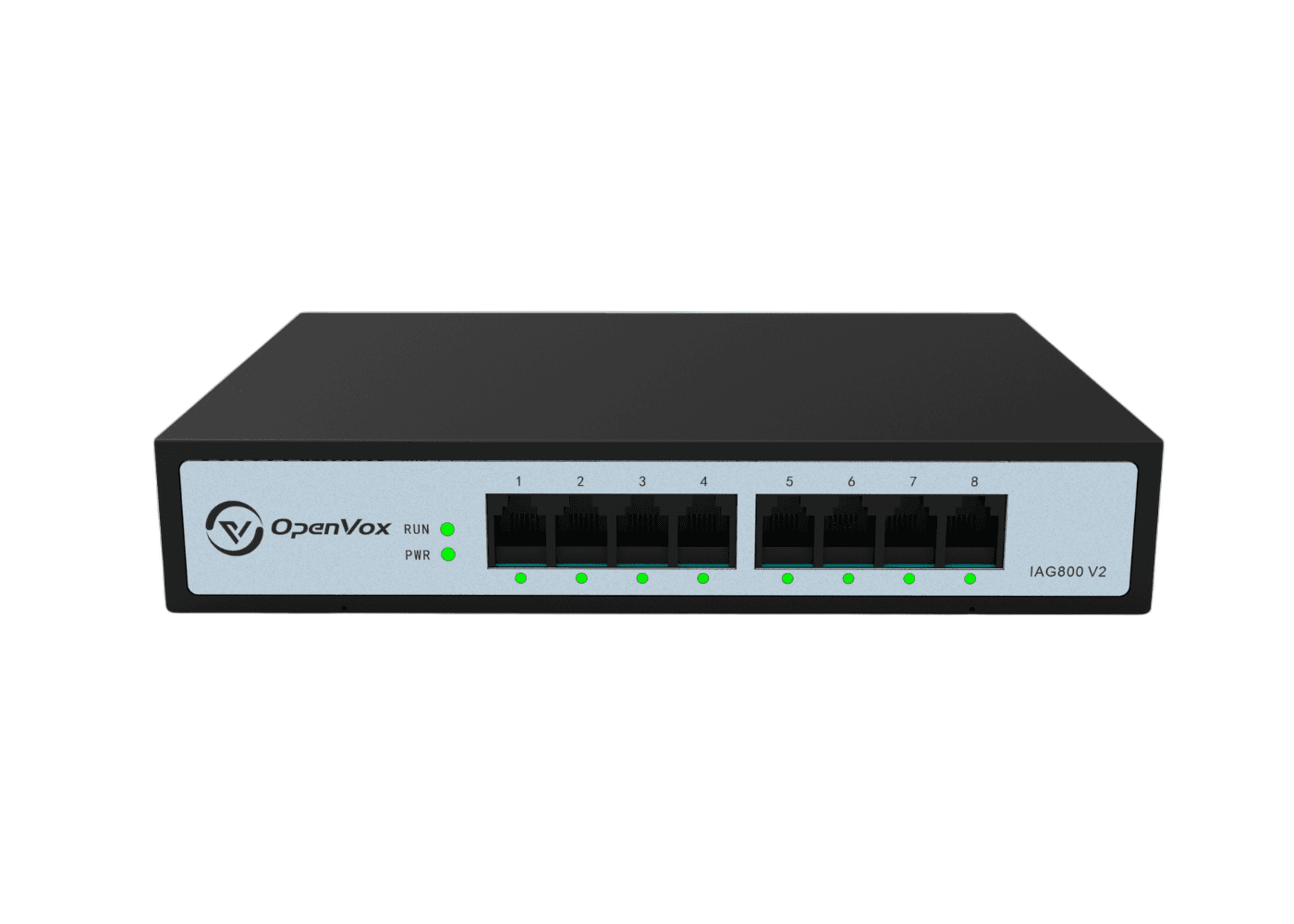
Use iAG rack or ATA products when retained FXS or FXO endpoints require an external boundary.
Keep routing, numbering, security and application ownership explicit for every connected endpoint.
Integrated provider access
UCP2120 can host the selected calling application and service modules, while external gateway families remain optional boundaries for digital, wireless, analog or ATA access.
Unified access, call control and selected application platform
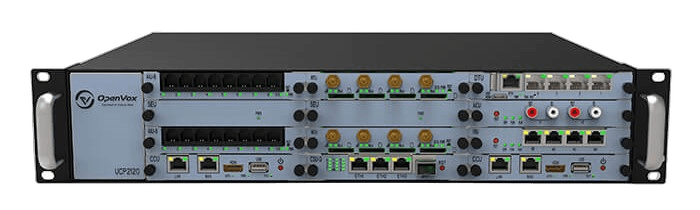
E1, T1, PRI, PSTN and approved cellular or audio access
Wireless, digital, FXS, FXO or ATA boundaries
Phones, software clients, intercom and paging
Routing, policy, security and service management
Define which access modules, calling applications and service roles run on the UCP chassis.
Use a matching gateway family when capacity, location or interface ownership sits outside the UCP chassis.
Confirm signaling, routing, security and operational ownership for every connected network.
A provider deployment should document interfaces, signaling and capacity before gateway selection, then prove the complete call path under operating conditions.
Record digital trunks, cellular channels, analog endpoint counts, sites and ownership boundaries.
Assign DGW, SWG and UScale IAD only where their documented interfaces match the handoff.
Document addressing, registration, routing ownership and the softswitch or IMS relationship.
Test inbound, outbound, failover and restoration behavior for every approved access path.
Final selection follows module capacity, signaling, cellular standard, endpoint count, placement and the applications approved for the UCP platform.
Primary product
Unified carrier-access, call-control and application platform shown in the approved architecture
View productOptional when needed
External wireless access gateway family
Use when: Use when cellular access is delivered through an external gateway instead of UCP modules.
View productOptional when needed
External E1, T1 or J1 digital access gateway
Use when: Use when digital trunks terminate on an external gateway.
View productOptional when needed
External FXS or FXO analog gateway family
Use when: Use when analog extensions or trunks terminate on a rack gateway.
View productOptional when needed
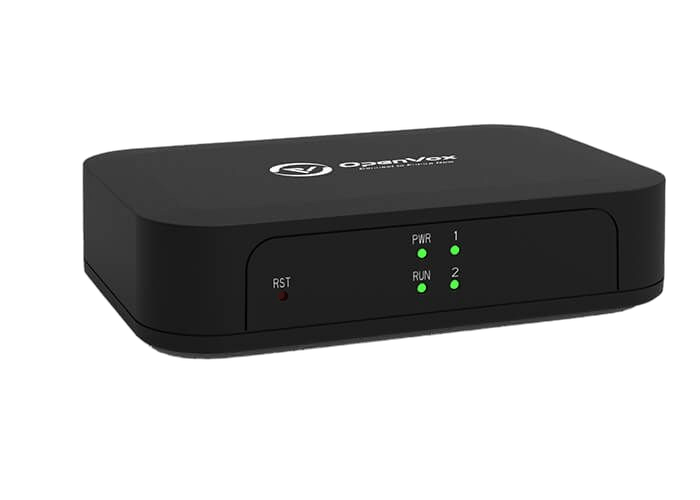
ATA access for a small number of retained analog endpoints
Use when: Use only where a small endpoint group requires FXS ATA access.
View productApplication compatibility, carrier certification, operator approval, regional signaling and final capacity remain project-specific validation items.
OpenVox documentation defines a 2U UCP chassis with two control-board slots and configurable service modules.
UCP service modules and external gateways cover selected digital, analog, cellular, audio and radio access roles.
The architecture connects phones, software clients and selected applications through explicit SIP roles.
Provider routing, policy, security and management responsibilities remain explicit throughout the design.
Share trunk types, signaling, cellular standards, endpoint counts, application requirements and site ownership. OpenVox can help define the UCP2120 modules, optional gateways and validation plan.