Do not force one universal cutover
Separate endpoint, line, trunk and PBX work before selecting the migration path.
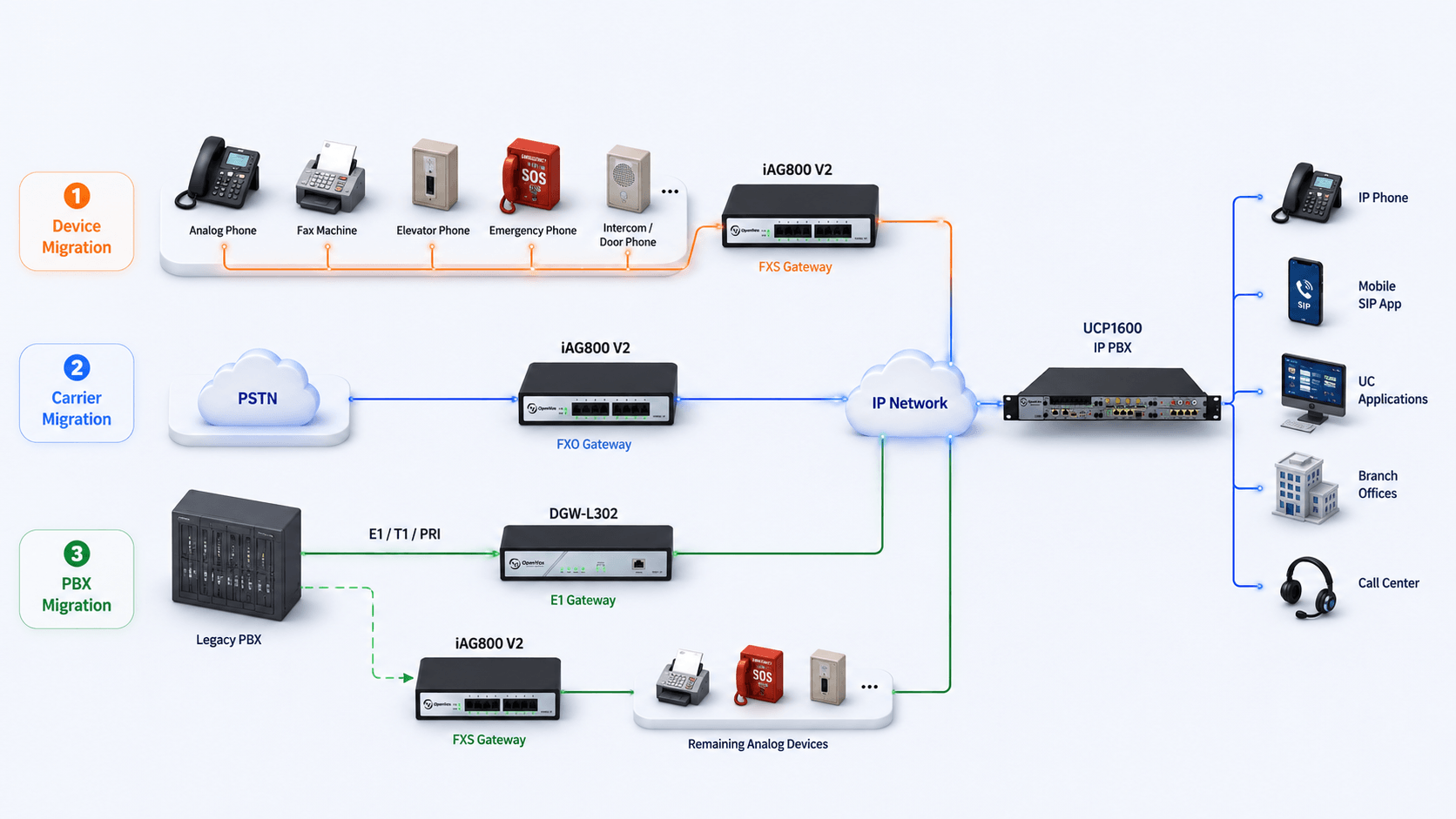
Modernize traditional voice services in manageable stages. Identify whether devices, the PBX or carrier access is driving the change, then follow the migration path that fits each dependency.
The migration starting point
An estate may combine analog phones, fax machines, PSTN lines, E1/T1 trunks and a traditional PBX.
A useful migration plan inventories these dependencies, separates the required interface paths and sequences change according to operational risk and business priority.
Start with FXS access and endpoint validation.
Legacy PBXStart with analog, digital or SIP coexistence.
ISDN / PSTNStart with switch-off readiness and trunk replacement.
POTS serviceStart with device-by-device POTS replacement.
Interface-led migration
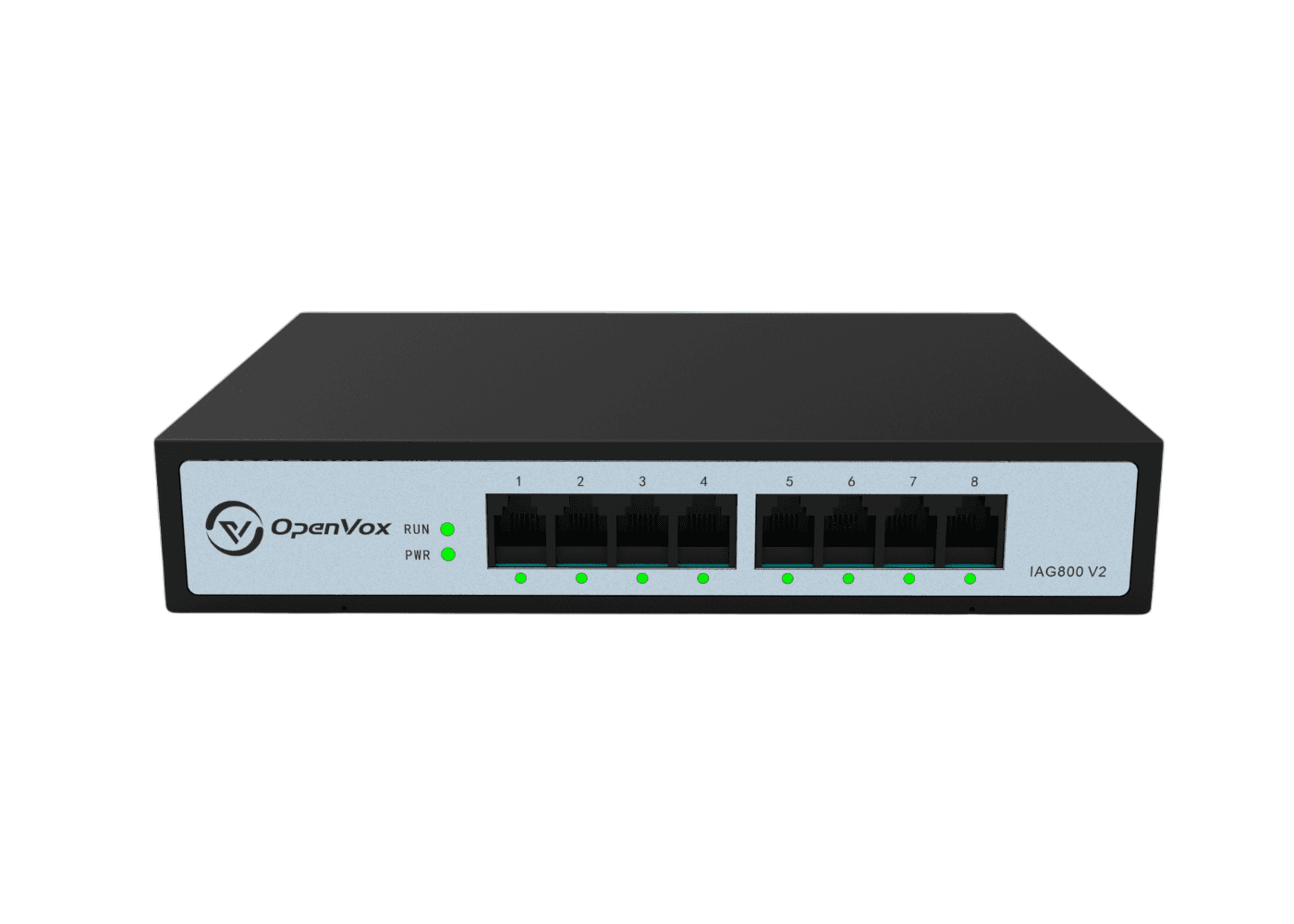
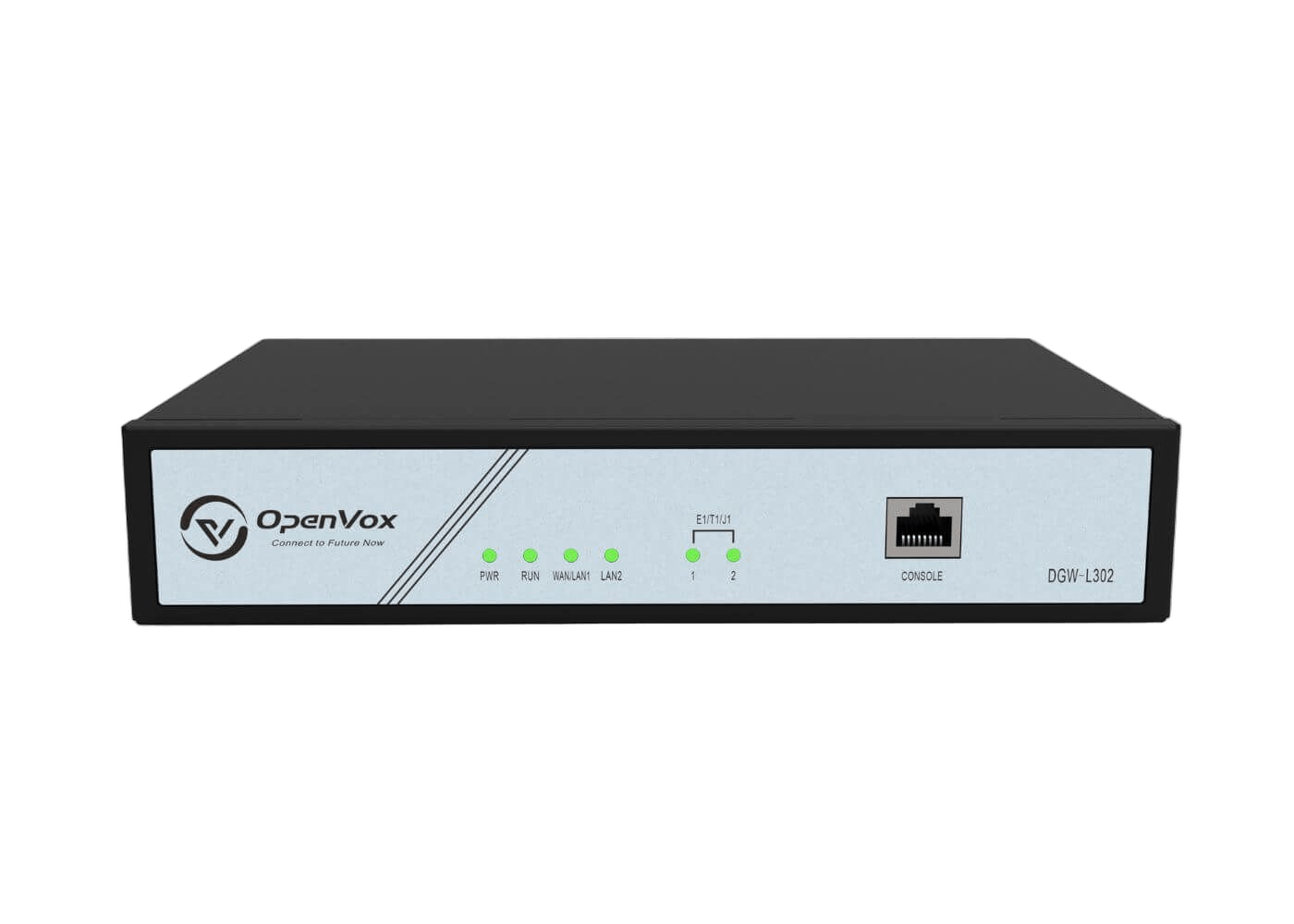
Use iAG800 V2 for the analog transition path and DGW-L302 for the digital trunk path, then continue into the narrower workflow that matches the retained estate.
FXS, FXO and retained POTS roles
E1, T1 or J1 carrier boundaries
Existing systems selected for coexistence
Analog and digital migration boundaries
Target calling environment and migration path
Separate endpoint, line, trunk and PBX work before selecting the migration path.
Use the mapped gateway role instead of treating all traditional voice as one interface.
Use this page as the decision guide and keep execution in the specialist migration pages.
The final architecture may combine several product families as the estate moves from traditional voice to SIP.
This page is a migration overview; detailed compatibility and capacity remain interface-specific assessments.
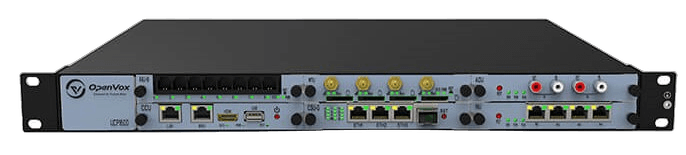
OpenVox FXS gateways and modules connect supported analog endpoints to SIP.
OpenVox FXO products connect analog PSTN and PBX interfaces to SIP.
DGW-L302 supports documented two-span E1/T1/J1 trunk and signaling options.
UCP supports standard SIP trunks for IP-PBX, softswitch and IMS environments.
Share devices, lines, trunks, PBXs, sites, carrier requirements and target systems. OpenVox can define the right gateway roles and validation sequence.