
High-volume public service
Coordinate agent, SIP and analog phones with approved local trunk access.
Bring central offices, departments and community service locations into one governed voice environment, so teams can call across sites while local systems remain connected.
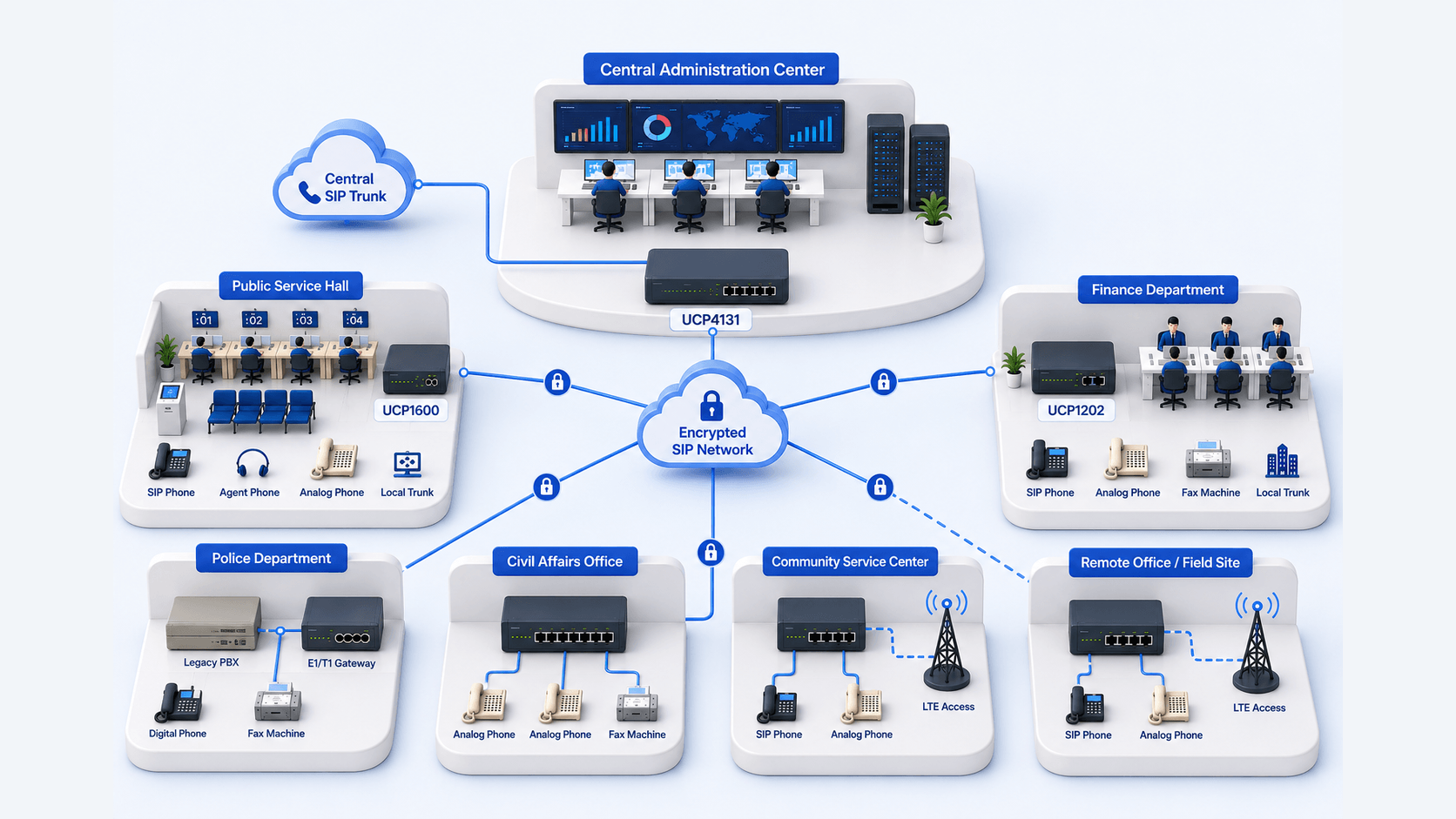
The public-service estate
Public-service locations often combine different call volumes, phone estates, trunks and levels of network readiness.
The supplied architecture keeps public service halls, finance offices, police departments, civil affairs offices, community service centers and remote field sites inside one plan, with high-concurrency SIP, mixed local trunks, legacy E1/T1 and analog access, and LTE access at selected remote sites.
Coordinate agent, SIP and analog phones with approved local trunk access.
Support finance, police and civil affairs sites without forcing one endpoint type.
Bridge legacy PBXs, E1/T1 services, analog phones and fax during the transition.
Use local SIP and analog service with LTE access for community centers and remote field sites.
Government voice architecture
Central voice governance provides shared unified numbering, permissions and monitoring across an encrypted SIP network, while individual locations retain the SIP access, E1/T1 trunks, analog phones and fax, or remote-site LTE access required by their current estate.
Call plan, routing, policy and reporting
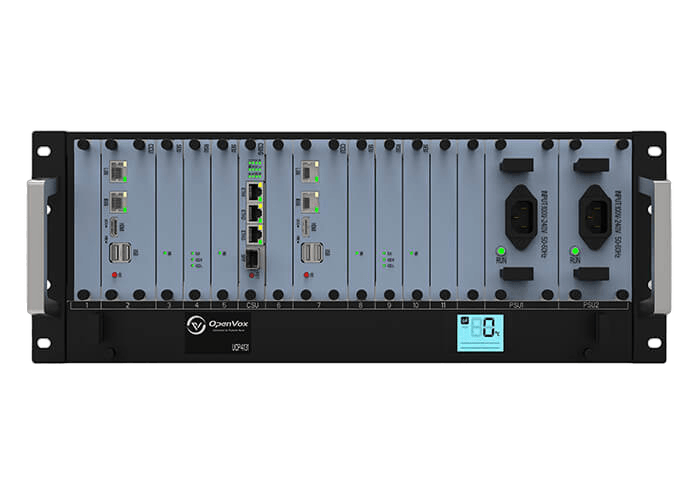
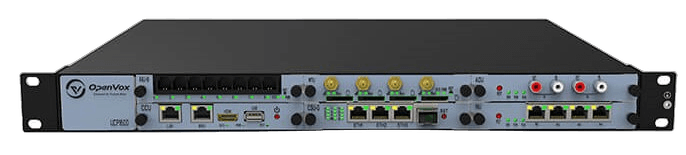
High-concurrency SIP and local trunks
Finance, police and civil affairs voice estates
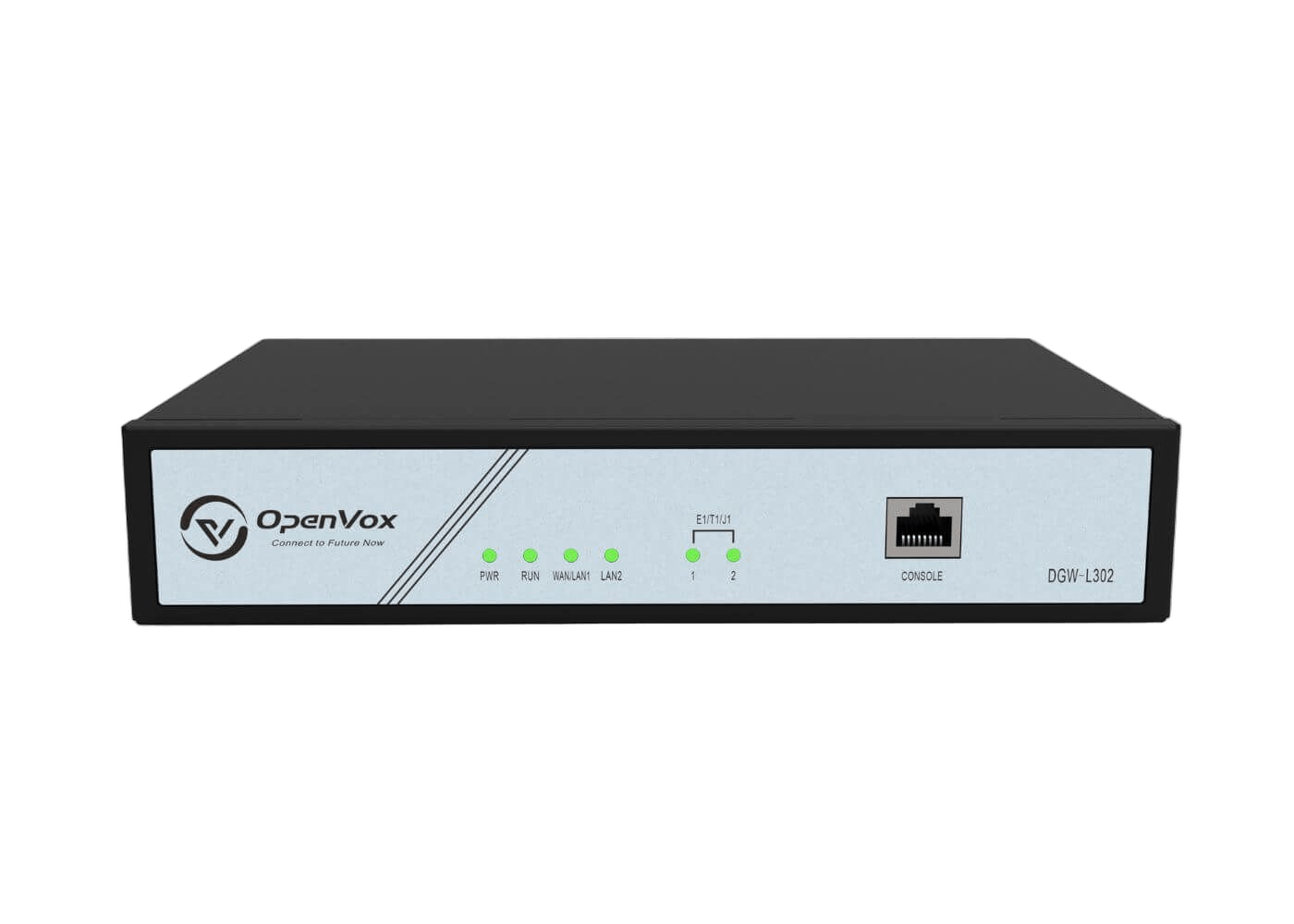
Legacy PBXs, E1/T1 trunks, analog phones and fax
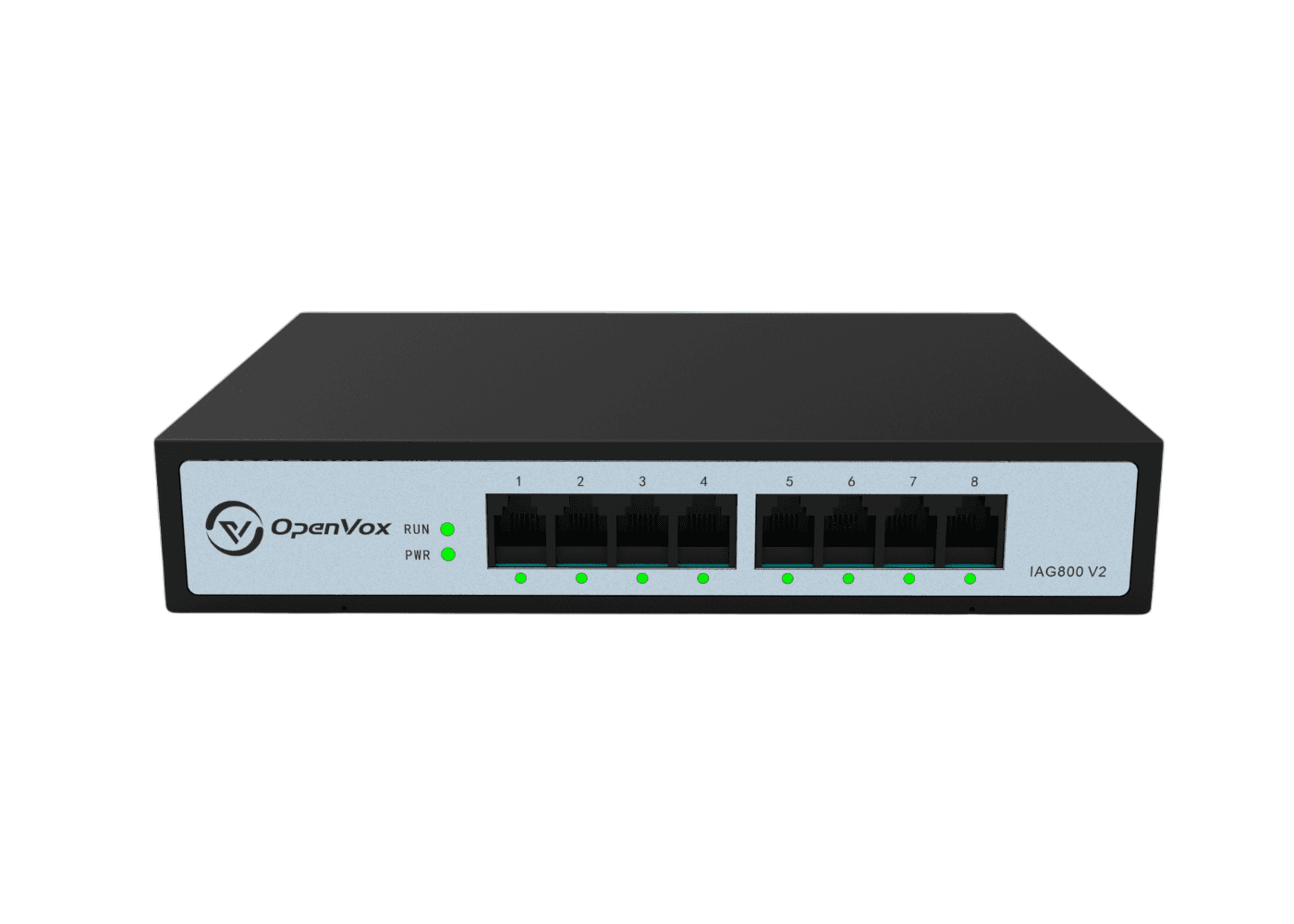
Remote SIP, analog and LTE access
Use shared numbering and routing while preserving clear permissions and ownership.
Carry SIP, digital and analog environments through one governed inter-site plan.
Give community centers and field sites approved SIP, analog and LTE access.
Document each department, the systems it retains and the local, external and inter-site calls that must pass before migration.
Record users, call volumes, PBXs, phones, fax, trunks and connectivity.
Define numbering, routing, permissions, monitoring and operating ownership.
Map SIP, local trunks, digital interworking, analog access and remote-site LTE access.
Test local, external, cross-department and remote-site calling before each cutover.
Product selection follows department scale, call volume, retained PBXs and endpoints, external trunks and approved remote-access requirements.
The design governs business and public-service voice; any public-safety, emergency-service or certification requirement needs a separate validation scope.
Shared numbering, routing, permissions, monitoring and reporting coordinate the estate.
Approved sites communicate through the common SIP network while local roles remain visible.
Existing PBXs, E1/T1 trunks, analog phones and fax can transition in phases.
Community centers and remote field sites can include LTE access when the approved operating plan requires it.
Share departments, service locations, call volumes, retained PBXs and endpoints, current trunks and remote-connectivity priorities. OpenVox can map the approved cross-site architecture and access boundaries.