
A control component fails
Use supported primary/standby behavior on selected UCP models.
Build business voice continuity around clearly defined failure scenarios and independently qualified provider paths. Validate expected failover and recovery behavior before the design is placed in service.
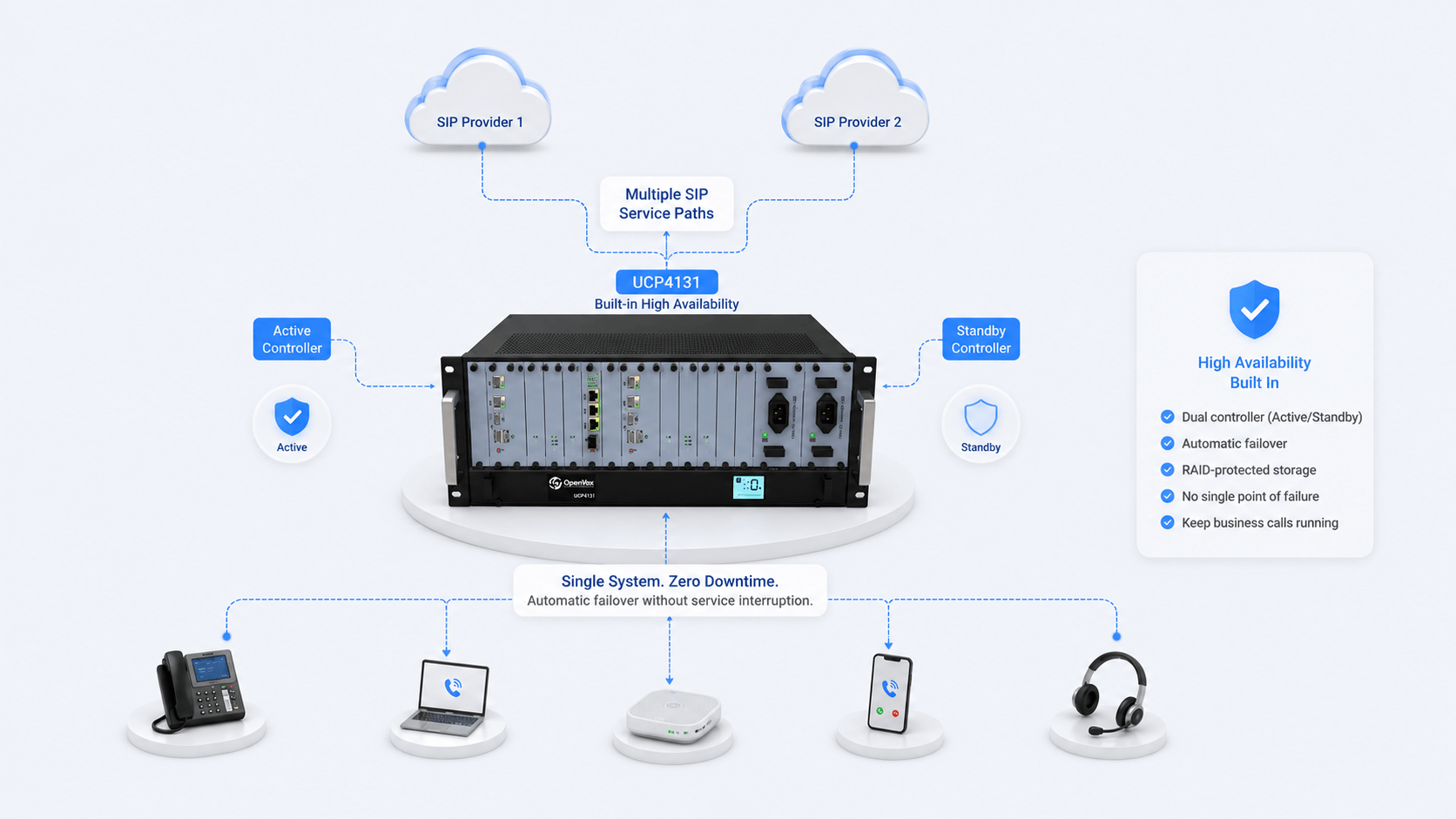
The interruption risk
A controller, complete system, SIP service or carrier trunk can interrupt different parts of the calling environment.
A credible high-availability design separates these failure layers and assigns a verified OpenVox mechanism to each one instead of making one universal uptime promise.
Use supported primary/standby behavior on selected UCP models.
Assess dual-system or distributed design according to the required service scope.
Use documented multiple-server registration where the gateway and service design support it.
Use the independently qualified provider path according to the accepted routing and recovery plan.
Protected behavior
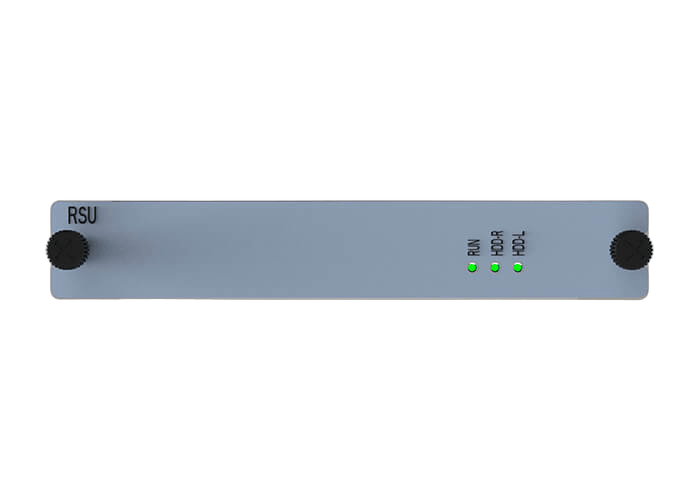
UCP4131 supports active and standby controller roles, model-specific RAID storage through RSU, and more than one SIP service path when the provider design is qualified.
Two independently qualified service routes
Protected UCP core with model-specific RAID
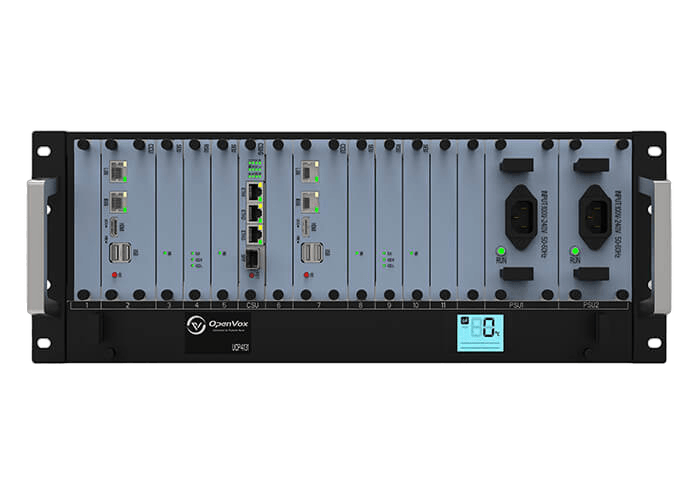
Normal call-control role
Model-supported recovery role
Desk phones, software clients and selected SIP devices
The operating team must know the ordinary call path before testing failure.
Separate controller, service and carrier failures instead of treating every outage alike.
Confirm when traffic returns and who validates service after recovery.
The approved architecture centers on UCP4131 controller protection, model-specific RSU storage and independently qualified SIP service paths.
Availability outcomes remain deployment-specific and require failure and recovery acceptance testing.
OpenVox documentation identifies controller, dual-system and power options on selected UCP models.
The RSU documentation defines the protected storage relationship for UCP4131.
Provider diversity helps only when registration, routing and failure behavior are tested together.
Actual call preservation and transition behavior must be verified for the chosen model and topology.
Share critical users and numbers, current UCP or PBX, SIP providers, trunk paths and expected failure behavior. OpenVox can help map model-specific protection layers.